

Share
Share
My daughter Nila is three years old. She's funny, independent, and fearlessly curious, with a love for books, dancing, and making everyone laugh (while sometimes also being a total menace). She is also, somehow, in almost every mockup my team has built this year.
I didn't do it on purpose. I'd be reviewing a screen – a transfer flow, a savings goal, a card design – and there her name would be, sitting in the recipient field. Then I noticed my colleagues doing the same thing with their own kids' names. Nobody assigned it, but it just kept happening.
When you design a product around someone's children, you stop designing just features and start designing for the most emotional relationship most of us will ever have.
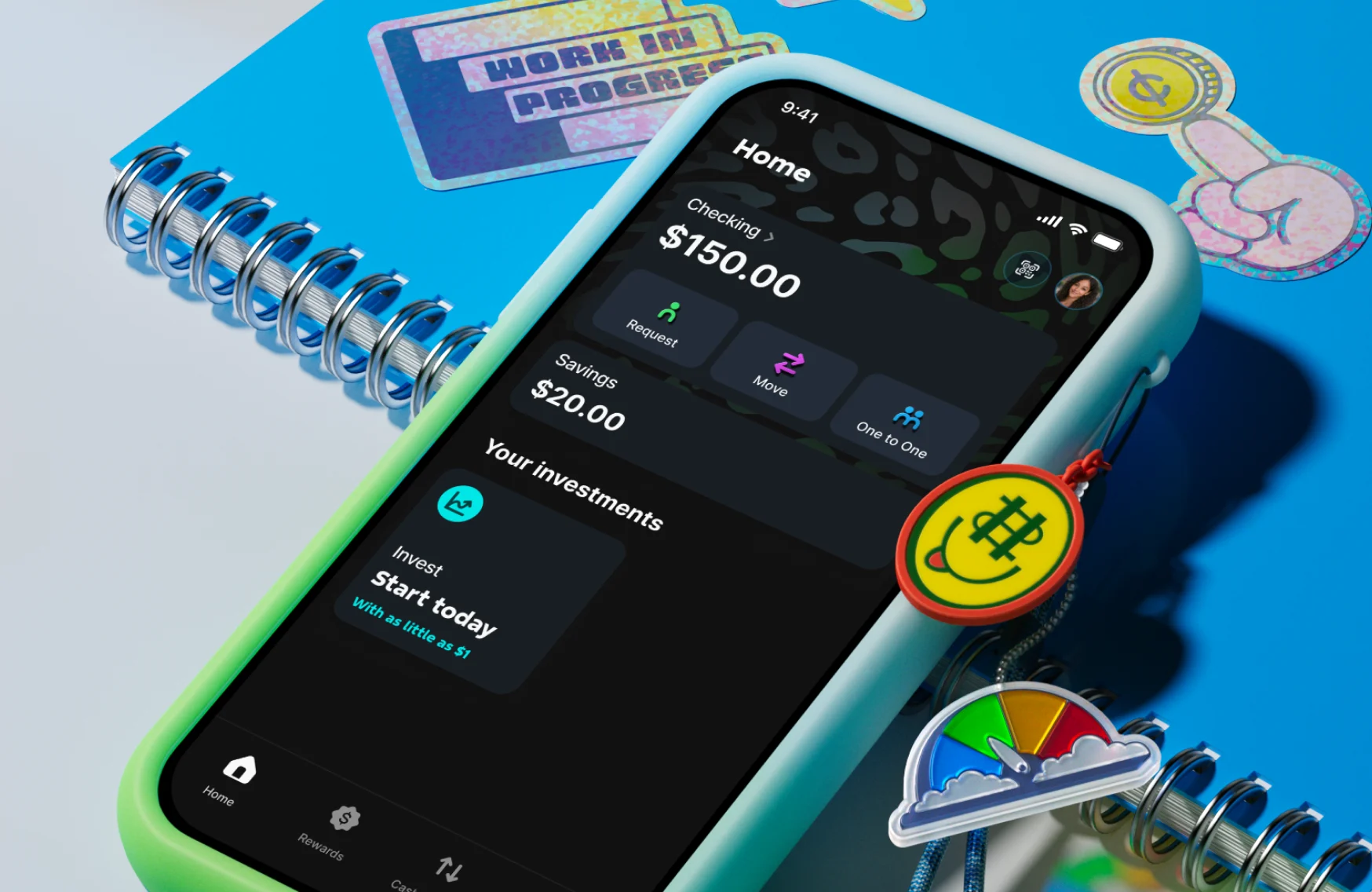
Today we're officially launching banking for families and teens at OnePay.
Starting now, if your child is 13-17 years old, they can have access to:
Savings, with the ability to set their own savings goals and earn 3.35% APY 1
Investing, once you add them to OnePay Invest2
Checking, with them as an authorized user on your account
A head start on building credit with their Builder Card3
A personalized card design
The vision
Our ambition is simple enough to be summarized in one sentence, which is usually a good sign:
Every kid has a 700 credit score, $1,000 in savings, and five years of investing experience when they turn 18.
Say it out loud and it sounds a little too easy, but the reality today is that most young people cross into adulthood with none of those three things at their disposal. A lot of people turn 18 with no credit history, next to no savings, and no idea how to invest or what to invest in. Which means their first apartment application, car loan, phone plan, or anything else they might need in their late teens and 20s just gets all the more difficult and expensive.
That's not a personal failing, it's an outcome of some people never having had the chance or the tools to get ahead. Most teens have never bought their first share of stock. They've never learned how compound interest can impact them over time. They might not know what it means to start building their credit (or what a good credit score is).
We ask 18-year-olds to make consequential financial decisions on day one of adulthood and give them no reps beforehand, and then we act surprised when it goes badly.
That's why we developed banking built for families and teens.
What it means
Investing for your teen can start now. The average American doesn’t make their first investment until around age 27. Add your teen to OnePay Invest and they’ll have the ability to invest with parental oversight. Five years before adulthood means five years of building real experience with money and getting an early start on investing in the market.
You can start building your teen’s credit early with the Builder Card. The Federal Reserve found that even a one- to two-year head start can compound. People who began building credit at 18 had a meaningfully higher score at age 30 than those who started at 19 or 20. Starting the clock early is one of the best advantages a family can give a teenager.
Money can move inside the family, instantly and for free. Allowance, gas money, the $25 your kid may need for a field trip they forgot to tell you about. With One to One4, all of it can move from parent to teen, teen to parent, or sibling to sibling. Family and friends can also send stocks as a gift: a birthday, a graduation, a grandparent who wants to put something toward the car fund.
Parental controls won’t feel like surveillance. Parents can set spending limits and card controls and see what's happening, but can do it in a way that ensures teens have room to make decisions on their own.
And at 18, it graduates. Your teen can keep the same Builder Card, and their money, investments, and rewards carry over when they open full OnePay accounts of their own.
It's hard to overstate how much starting early matters. Credit history, savings, and confidence all reward the same thing: time. That's why we built this product the way we did: not an account that you exclusively control from your phone, but a structure that gives your teen room to manage their day-to-day spending and saving and make their own decisions, while you can still see what's going on.
I still remember the time I accidentally overdrew my account in college, and had no one to call. That’s a bad way to learn. Nila's not old enough for this yet, but when she is, I don't just want her to have money set aside when she turns 18. I want her to have years of experience handling her own finances, and the confidence that comes with it.
And for every parent, I want them to feel that same pride watching their kid build smart financial habits as they do watching them walk, talk, or hit any other milestone. So I'll leave you with this: Nila's fall 2025 PTA write-up, which has inspired me and the whole team throughout this launch.

Banking for families and teens is available in the OnePay app today.